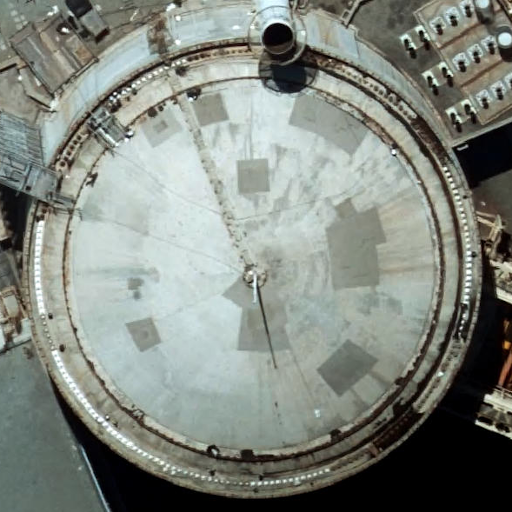
Where did the R1bn compensation claim paid by Eskom go?

Eskom has been ordered by the Western Cape High Court to pay a R1 billion compensation claim to Framatome, the supplier for the Steam Generator Replacement (SGR) project at Koeberg Nuclear Power Station. This costly consequence stems from a January 2022 decision by the National Nuclear Regulator (NNR) to approve the SGR project, despite Eskom’s failure to complete a building for the safe storage of the old, highly radioactive steam generators. 

The R1 billion, if paid, could potentially be shared between Framatome, Lesedi (the local contractor) and various subcontractors such as multinational engineering firm, Asea Brown Boveri (ABB). 

Continue reading
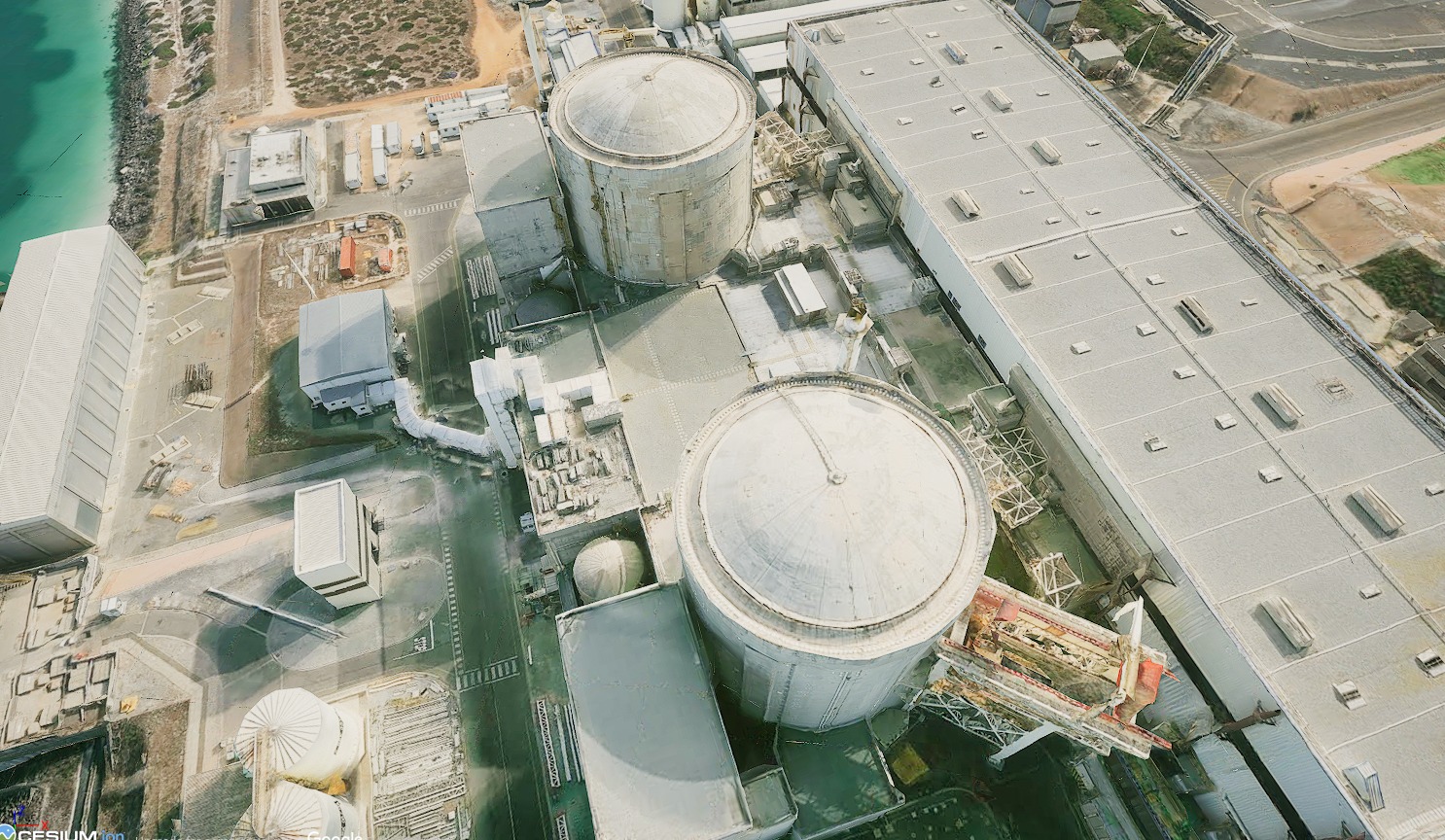
Civil society responds to draft IRP: Nuclear push is costly, risky and unjust

The current image has no alternative text. The file name is: mallinson-2.jpg

Civil society organisations have joined growing criticism of the Department of Electricity and Energy’s proposed expansion of nuclear energy in the recently released draft Integrated Resource Plan (IRP), raising concerns about its financial viability and even its legality.

Summary of the draft IRP

Released in January 2025, the draft IRP’s purpose is to provide a roadmap for meeting South Africa’s forecasted electricity demand and was originally prepared under Minister Mantashe in the Department of Mineral Resources and Energy but the responsibility has since been handed over to the new Minister of Electricity and Energy, Dr. Kgosientsho Ramokgopa.

Continue reading

Koeberg: Intermittent and unpredictable

Koeberg nuclear power station was recently unexpectedly offline for over a week owing to multiple trips at the facility which eventually, combined with a high level of unplanned outages at other plants and finally issues at Kusile, resulted in stage 3 load shedding. Koeberg has come under renewed scrutiny for its inconsistent power generation.

Eskom’s media statement released on Monday, 10 March 2025, was titled: “Koeberg Unit 2 successfully restored to service following unplanned outage, delivering 930MW of reliable baseload power to South Africa” but energy experts and civil society organisations refute the “reliable baseload” statement.

Continue reading

State of disaster regulations a nightmare

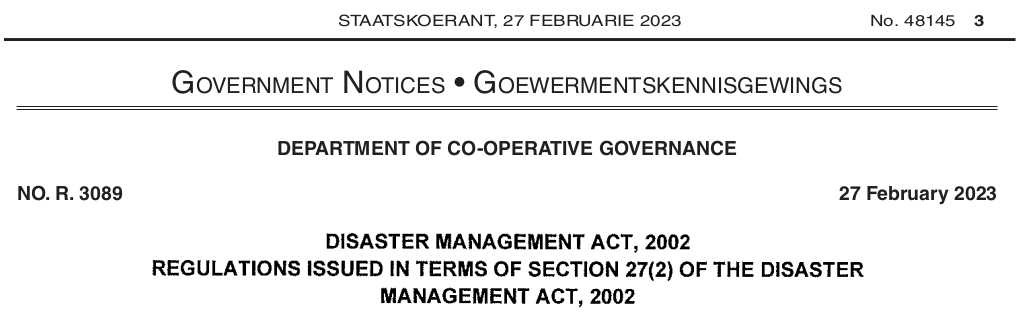
On 27 February 2023 the Department of Cooperative Governance and Traditional Affairs gazetted the national state of disaster regulations related to South Africa’s energy crisis.

When the government first announced that it intended to declare a state of disaster, many experts and organisations stated that it was not necessary and a relaxed legislative environment would erode democratic governance. Inaction by the Department of Mineral Resources and Energy (DMRE) caused the high levels of load shedding. Declaring a state of disaster was just an attempt to deflect blame.

This declaration of a state of disaster to “cut through the red tape” also allows the state to bypass important regulations and processes which is a major concern.

Continue reading

The Risks of an “Energy Emergency”

A declaration of an ‘energy emergency’ has been touted as a necessary step to “cut through the red tape” and address the electricity crisis. But what exactly does this mean? Which regulations or processes will be bypassed?

When it comes to the Koeberg nuclear plant, one upcoming regulatory requirement and a concern for those advocating for a life extension is getting approval from the National Nuclear Regulator (NNR). The current operating licence expires in July 2024, and without the NNR granting a life extension, this is when the plant will have to be permanently shut down.

Continue reading

Eskom statement re Koeberg outage confusing and disingenuous

On 15 January Eskom released a statement saying that Koeberg unit 2 “will on Monday 17 January 2022 be taken offline for a regular refuelling and maintenance outage that is scheduled for five months.”

Setting the disingenuous tone
Firstly it is disingenuous to call this a “regular refuelling” outage. It is about as accurate as saying your car is going to the mechanic for refuelling, and by the way while busy filling the tank they will also replace the gearbox. The vast majority of the cost and the duration of the outage will be to do the refurbishment, so it is more accurate to call this a refurbishment outage.

Continue reading

Anti-nuclear protest highlights safety concerns at Koeberg

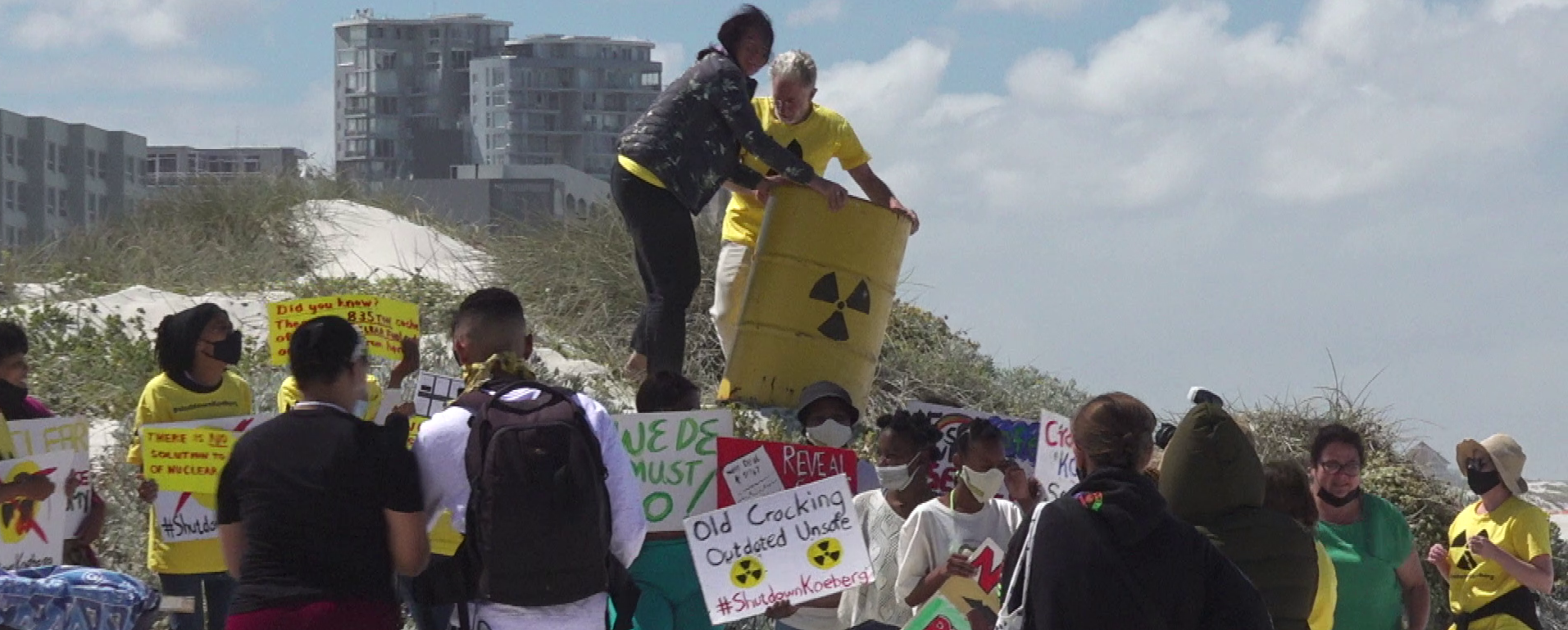
An anti-nuclear demonstration held on Bloubergstrand Beach on 16 December highlighted concerns of Capetonians about the implications of Eskom extending Koeberg’s lifespan next year. The nuclear plant reaches the end of its 40-year lifespan in 2024 but Eskom is trying to extend its operating life by another 20 years before any public consultation.

Demonstrators on beach holding posters
Continue reading

Koeberg airborne contamination incident

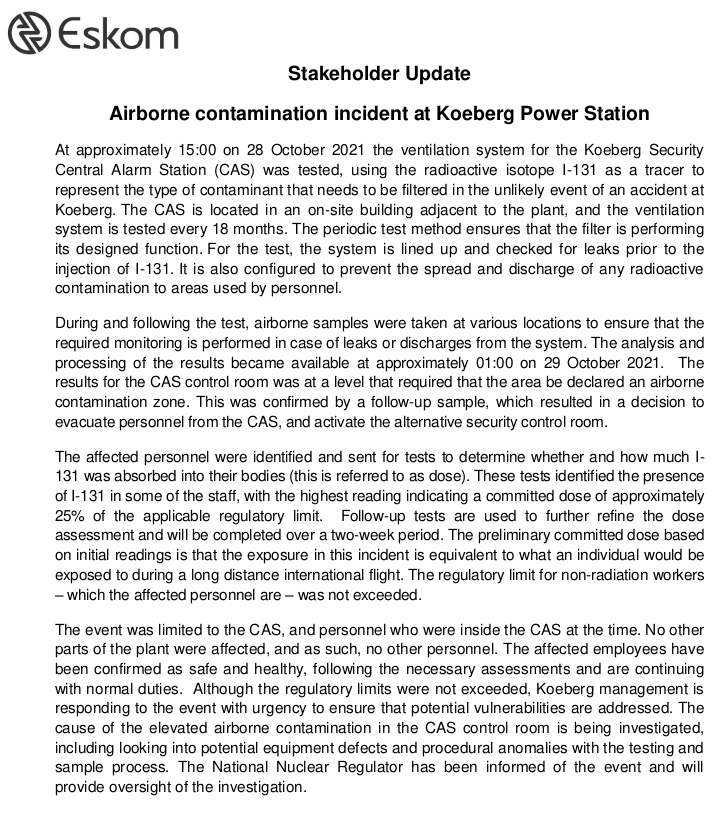
Shortly after midnight on 28 October 2021 some test results became available which found excessive levels of Iodine-131 in the ventilation system at the Koeberg nuclear power station. This was likely a result of a test which had been done in the afternoon, combined with faulty filtration systems that meant the Koeberg Security Central Alarm Station (CAS) had to be evacuated.

While it is reassuring that Eskom were testing this safety system, no standard test procedure includes evacuating all staff from the security nerve centre of a nuclear plant. Clearly there was something significantly wrong.

While Eskom has not released much by way of detail, it is likely to be a result of a combination of three factors.

Continue reading

NERSA conditional nuclear concurrence distracts from Koeberg problems

NERSA conditional concurrence with new nuclear

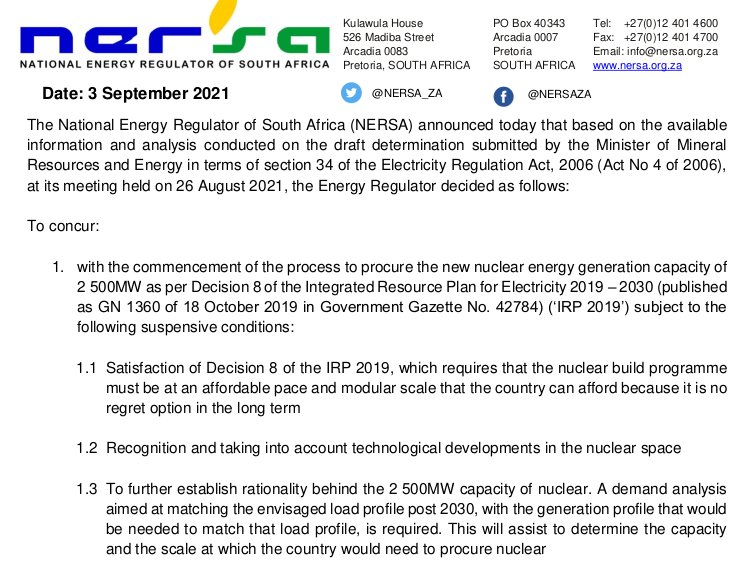
The National Energy Regulator of South Africa (NERSA) has given a conditional concurrence with the section 34 ministerial determination to proceed with procuring a new nuclear plant. This concurrence has some crucial suspensive conditions, in particular 1.3. This makes it clear that given the information put before NERSA, the decision to go ahead with a nuclear build cannot be considered rational.

Continue reading

Civil society responds to reports of Koeberg contract

It was recently widely reported in the media that a US-based engineering company has been awarded a portion of a R20bn contract to extend the life of the Koeberg nuclear power plant. Activists and civil organisations are concerned that the legal processes required to grant a licence for a life extension have not been followed.

Koeberg’s nuclear licence expires in 2024

In order to operate beyond 2024, Eskom needs the approval of the NNR, and a new licence to be issued. This licencing process is described in new regulations published in March 2021, which requires a notice in the government gazette as well as announcements in local newspapers. This would allow the public to make comments for the NNR to take into account before making a decision. However, it appears that this process has not been followed.

Continue reading