Bantamsklip and Thyspunt nuclear plant formal public meetings

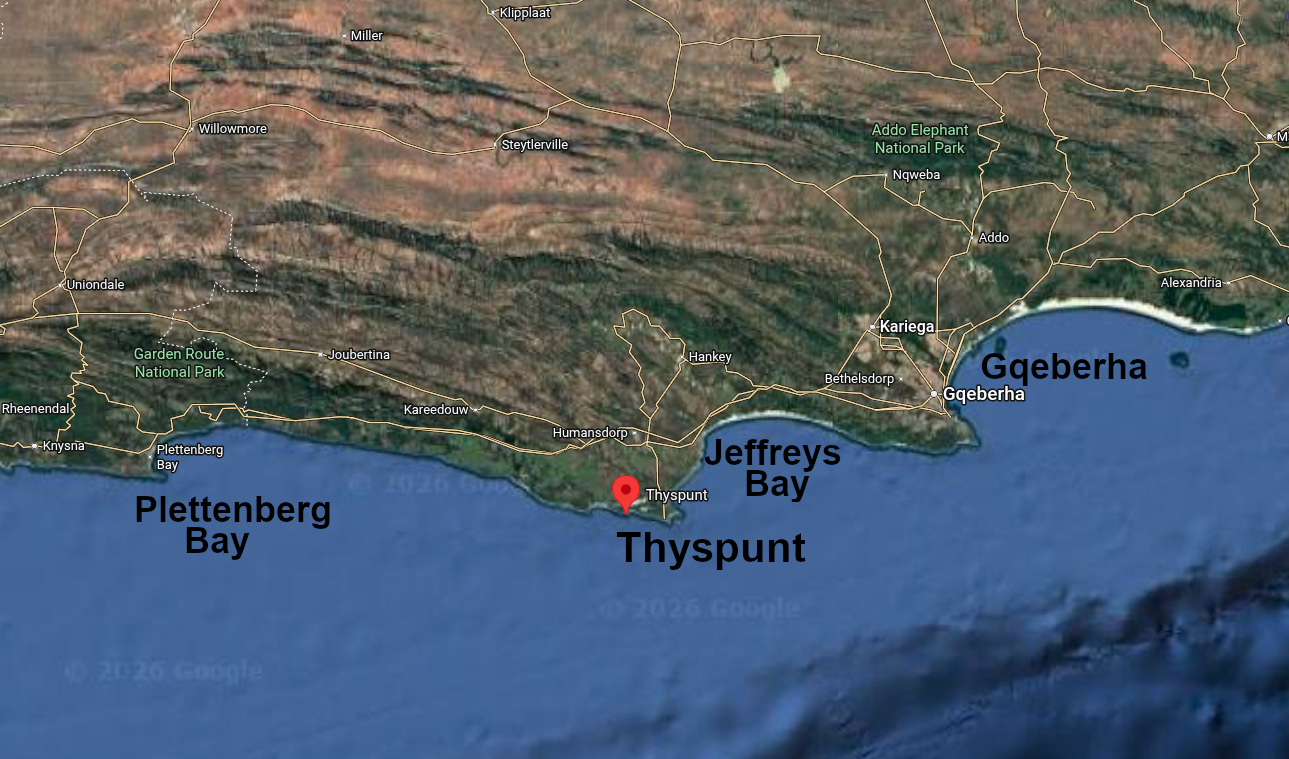
A new round of public meetings on the proposed Bantamsklip and Thyspunt nuclear power developments are taking place across the Overstrand and surrounding regions, offering communities an opportunity to engage directly on the project.

Meetings begin in the Overstrand, with sessions scheduled for early April an then the programme will continue across the Eastern Cape later in the month.

Read more: Bantamsklip and Thyspunt nuclear plant formal public meetings
Meeting numberDateTimeVenueAddress
107 April 202618:00 – 20:00Hermanus Municipal Auditorium1 Magnolia St, Hermanus, 7200
208 April 202618:00 – 20:00NG Kerk Pearly BeachMain Road, Pearly Beach, 7220
309 April 202618:30 – 20:30Gansbaai Tourism Information and Conference Center HallGreat White Junction, Main Road, Gansbaai, 7220
420 April 202618:00 – 20:00St Francis Bay Golf Club556 Lyme Rd, St Francis Bay, 6312
521 April 202618:00 – 20:00KwaNomzamo Community HallMjekula St, Humansdorp, 6300
622 April 202618:00 – 20:00Sea Vista HallGeelbek St, St Francis Bay, 6312
723 April 202618:00 – 20:00Oyster Bay HallOester Ave, Oyster Bay
824 April 202618:00 – 20:00Newton Hall17 Goedehoop St, Jeffreys Bay, 6330

These sessions form part of the public participation process concerning the proposed nuclear power station at Bantamsklip and Thyspunt, which begin with a Draft Scoping Report.

A Draft Scoping Report is the critical first step in an Environmental Impact Assessment that defines the boundaries of what a developer will study, and engaging with it is vital to ensure the inclusion of crucial issues that proponents may wish to “scope out” to secure an easy approval. If the public fails to ensure any issue is included in the Scoping Report at this stage, they lose the right to challenge such an omission later.

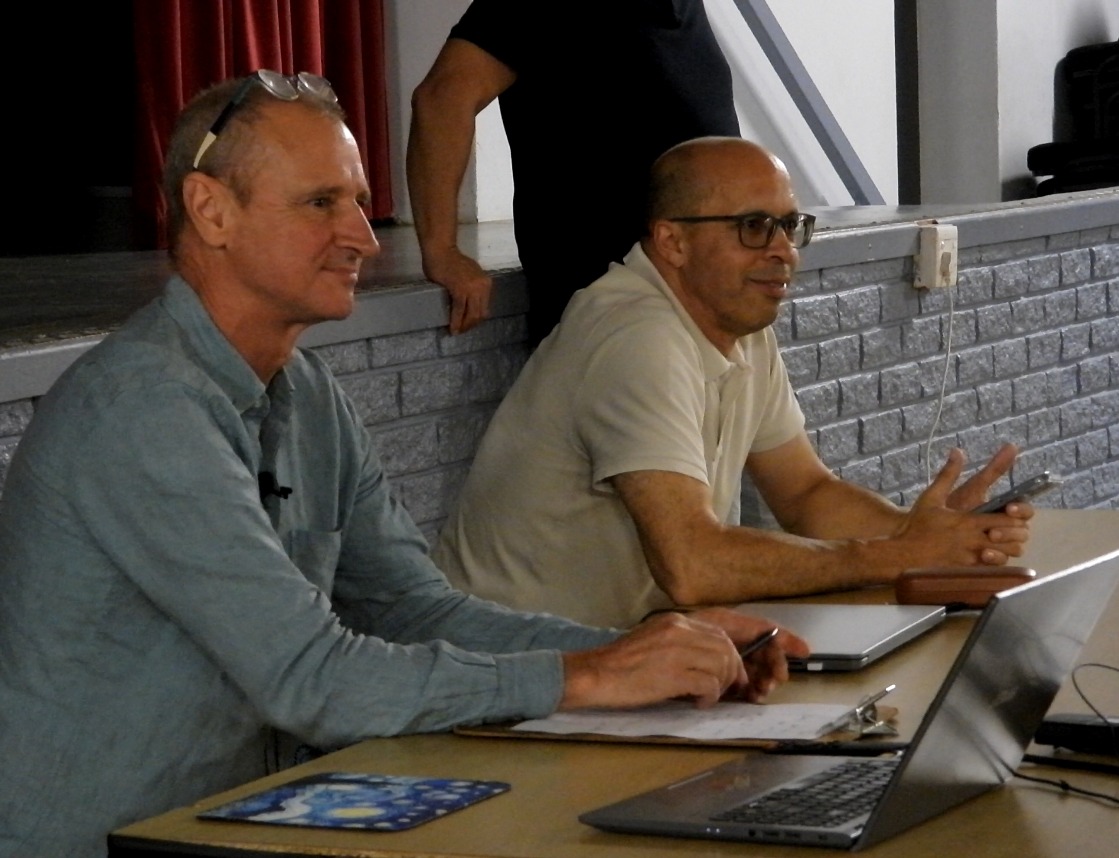
The upcoming engagements follow strong community turnout at earlier meetings held in February in Hermanus and Pearly Beach. Approximately 280 residents gathered in Pearly Beach to voice concerns about the potential impacts of the development. The event, hosted by the Overstrand Environmental Association, brought together residents, environmental groups, business owners and community leaders.

The National Nuclear Regulator (NNR), as well as other bodies who advocate for nuclear power, were invited to be presenters, but only the NNR responded, and Mr Peter Bester gave a presentation focussing on nuclear safety issues at the Hermanus meeting.

The presentation by nuclear expert Peter Becker, of Koeberg Alert Alliance and former National Nuclear Regulator (NNR) board member, drew on technical modelling, regulatory insights and international case studies to unpack the implications of a nuclear build in the region.

Key concerns remain unchanged

A central issue continues to be cost. Multiple South African energy studies including Integrated Resource Plans, CSIR analysis and research from UCT’s Energy Systems Research Group — have consistently found that nuclear power does not form part of the country’s least-cost energy mix.

Internationally, nuclear projects have a track record of cost overruns and delays, with the majority exceeding budgets and timelines by significant margins. These projects typically require long-term state guarantees, raising concerns about the financial burden on taxpayers.

Residents have also raised concerns about long-term economic risk. The Overstrand economy is heavily dependent on tourism, agriculture and fisheries — sectors that are particularly vulnerable to both the perception and potential reality of environmental risk.

The issue of nuclear waste remains unresolved, with no long-term high-level waste solution currently in place anywhere in Africa. The intergenerational implications of waste storage continue to be a point of concern.

Community voices and local impact

Community members have highlighted the potential risks to marine ecosystems and livelihoods, particularly for those living in Buffeljagsbaai dependent on fishing and coastal resources. Questions remain around how a nuclear facility could affect access to fishing areas and the broader marine environment.

There is also concern about the potential consequences of a major incident, including long-term land exclusion, economic disruption, and damage to the region’s reputation as a tourism and agricultural hub.

Call for transparency and meaningful participation

As the public participation process continues, there is a growing call for transparency, accountability and credible evidence to support any decision of this scale.

The strong turnout at previous meetings — and the anticipated engagement at April’s sessions — signals that communities are paying close attention and expect to be meaningfully involved in decisions that could shape the region for generations.

Koeberg Emergency Plan outdated 

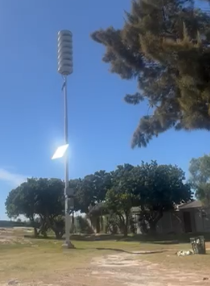
Photo of a siren on a pole

Koeberg Nuclear Power Station conducted full-volume siren and speaker tests of the Koeberg Public Warning System on 3 March 2026. The sirens form part of The Koeberg Emergency Plan and are intended to ensure that the public warning system is fully functional and able to alert communities within the 16-kilometre emergency planning zone — including Atlantis, Duynefontein, Melkbosstrand, Philadelphia, Bloubergstrand and Parklands — in the event of a nuclear incident.

The alert system includes both a siren tone and a spoken public address message. Mixed reactions were reported from residents in the surrounding communities, with many saying the audio announcements were difficult to understand or could not be heard clearly inside their homes.

Continue reading

Where did the R1bn compensation claim paid by Eskom go?

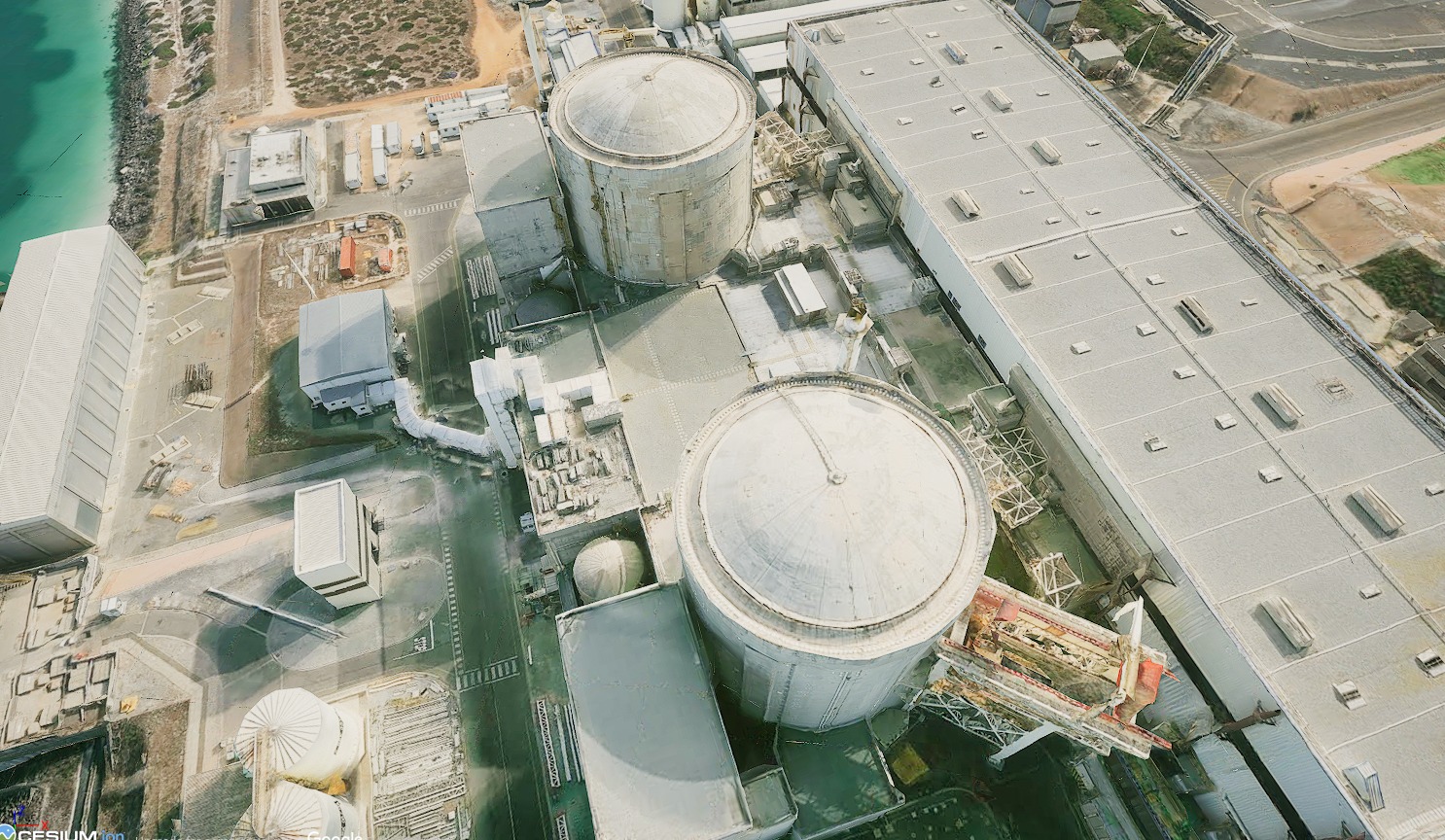
Eskom has been ordered by the Western Cape High Court to pay a R1 billion compensation claim to Framatome, the supplier for the Steam Generator Replacement (SGR) project at Koeberg Nuclear Power Station. This costly consequence stems from a January 2022 decision by the National Nuclear Regulator (NNR) to approve the SGR project, despite Eskom’s failure to complete a building for the safe storage of the old, highly radioactive steam generators. 

The R1 billion, if paid, could potentially be shared between Framatome, Lesedi (the local contractor) and various subcontractors such as multinational engineering firm, Asea Brown Boveri (ABB). 

Continue reading

Civil society responds to draft IRP: Nuclear push is costly, risky and unjust

The current image has no alternative text. The file name is: mallinson-2.jpg

Civil society organisations have joined growing criticism of the Department of Electricity and Energy’s proposed expansion of nuclear energy in the recently released draft Integrated Resource Plan (IRP), raising concerns about its financial viability and even its legality.

Summary of the draft IRP

Released in January 2025, the draft IRP’s purpose is to provide a roadmap for meeting South Africa’s forecasted electricity demand and was originally prepared under Minister Mantashe in the Department of Mineral Resources and Energy but the responsibility has since been handed over to the new Minister of Electricity and Energy, Dr. Kgosientsho Ramokgopa.

Continue reading

Koeberg: Intermittent and unpredictable

Koeberg nuclear power station was recently unexpectedly offline for over a week owing to multiple trips at the facility which eventually, combined with a high level of unplanned outages at other plants and finally issues at Kusile, resulted in stage 3 load shedding. Koeberg has come under renewed scrutiny for its inconsistent power generation.

Eskom’s media statement released on Monday, 10 March 2025, was titled: “Koeberg Unit 2 successfully restored to service following unplanned outage, delivering 930MW of reliable baseload power to South Africa” but energy experts and civil society organisations refute the “reliable baseload” statement.

Continue reading

Civil society pushes for community inclusion in nuclear governance

Civil society organisations working in the areas of energy, climate, and sustainable development have called on the Minister of Electricity and Energy, Kgosientsho Ramokgopa, to initiate an open call for nominations to appoint a much-needed community representative to the National Nuclear Regulator (NNR) board.

“The position has been vacant for over three years,” says youth activist Gabriel Klaasen. “In that time, critical decisions about Koeberg and new nuclear generation have been made without any representation from affected communities on the NNR board. This contradicts the Minister’s stated commitment to meaningful and fully informed public participation in the energy sector.”

Continue reading

Minister Ramokgopa’s withdraws nuclear determination

In 2020 Minister Mantashe submitted a determination under section 34 of the Electricity Regulation Act to the National Energy Regulator of South Africa (NERSA) calling for the procurement of 2500MW of new nuclear generation capacity. After a public consultation process, NERSA issued a ‘conditional concurrence’, specifying three suspensive conditions. The main one of these was that the Minister had yet to demonstrate that such a procurement would be ‘rational’. The Department of Mineral Resources and Energy (DMRE) then submitted a response to these conditions to NERSA in July 2023 but controversially did not release that response to the public. The DMRE then announced it had received full concurrence from NERSA and was proceeding with the procurement process.

Many civil society organisations and academic groups maintain that there is no rational basis for a nuclear procurement, which is a possible explanation for the attempt by the DMRE and Mantashe to proceed without public scrutiny. Two organisations, SAFCEI and Earthlife Africa launched a court challenge which demanded that the reasons for lifting the suspensive conditions should also be subject to public comment.

Continue reading

NNR Court case:  Deadline for ConCourt appeal passes

As described in a previous post both Minister Mantashe and the National Nuclear Regulator (NNR) appealed against Peter Becker’s victory in the Western Cape High Court in January 2023. Despite the High Court refusing leave to appeal, the appeal was heard by a full bench of five judges at the Supreme Court of Appeal in Bloemfontein on 17 May 2024.

The Supreme Court of Appeal issued a ruling on 28 June 2024 upholding the High Court findings, as well as making additional observations. The NNR and the Minister could have appealed again to the Constitutional Court, but the deadline to do so passed on 19 July without either party filing papers to the Constitutional Court.

The original case was filed in response to Minister Mantashe dismissing Becker from the Board of the NNR, where he was appointed to represent the interests of communities. Becker asked to High Court to review the Minister’s decision, and the High Court ruled that Mantashe’s decision to dismiss was unlawful, unconstitutional and done in bad faith with an ulterior motive with undue haste.

The following describes the appeal hearing, the ruling and also includes the full Heads of Argument submitted to the Court and the full Ruling (see bottom of this article).

Continue reading

Civil society responds to NNR decision to extend Koeberg’s unit one licence

On Monday 15 July 2024, the National Nuclear Regulator (NNR) granted Eskom a licence to continue operating Koeberg Nuclear Power Station Unit 1 for another 20 years until 21 July 2044.

The decision was made just seven days before the licence expired and civil society organisations are in uproar about what they regard as a rushed and ill-considered decision.

Continue reading

Threat of legal action forces release of safety information about Koeberg

Extract from the previous version of the Safety Case – revision 1a

This press statement was first released by Save Bantamsklip on 15 September 2023

In March 2023 civil society groups rejected the consultation process for the Koeberg life extension run by the National Nuclear Regulator (NNR), citing concerns about a lack of transparency. Those concerns are now vindicated as the threat of legal action has forced Eskom to release information that was previously being withheld from the public by both Eskom and the NNR. (The newly released versions can be found at the bottom of this article.)

Continue reading