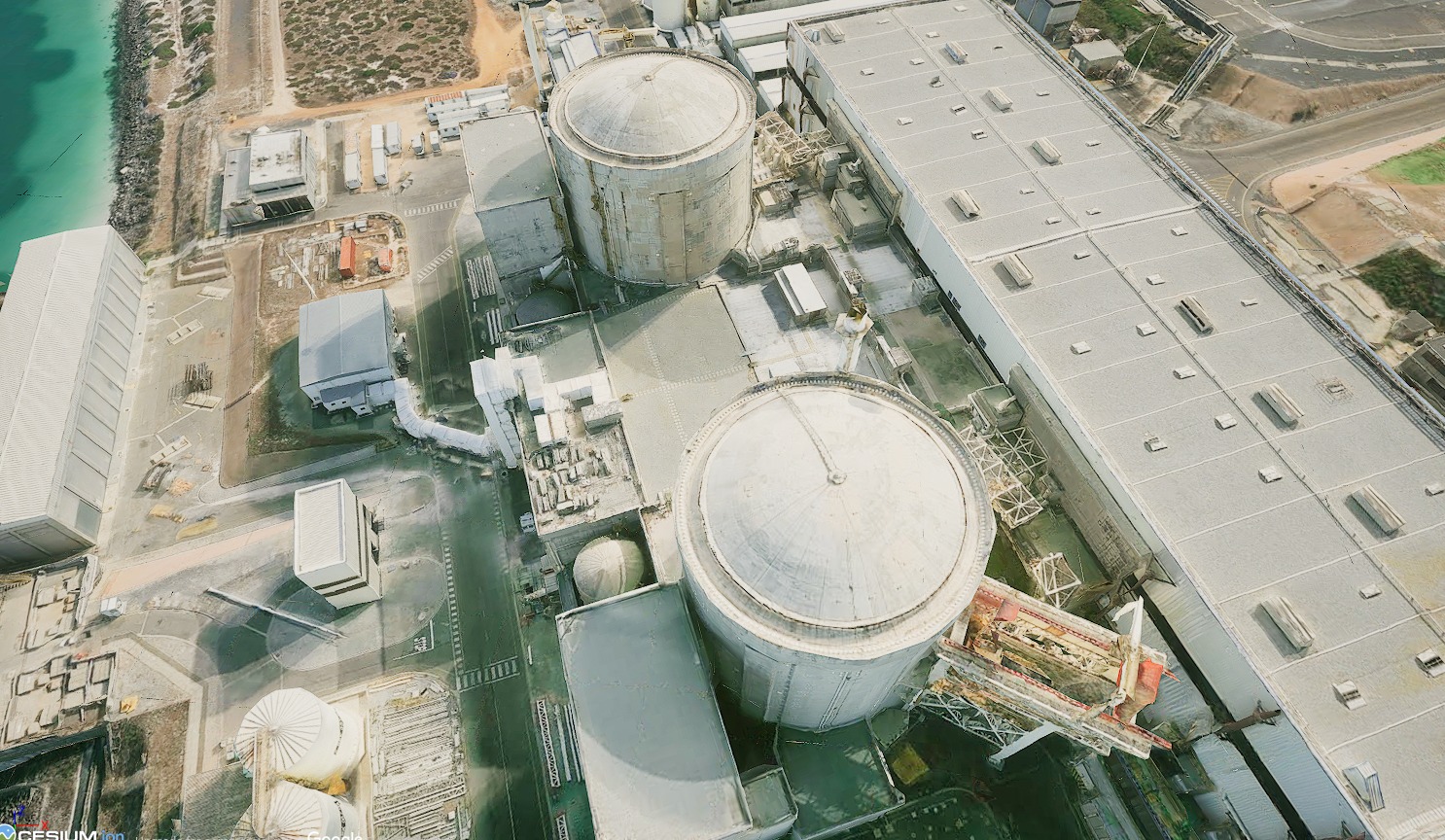
Koeberg: Intermittent and unpredictable

Koeberg nuclear power station was recently unexpectedly offline for over a week owing to multiple trips at the facility which eventually, combined with a high level of unplanned outages at other plants and finally issues at Kusile, resulted in stage 3 load shedding. Koeberg has come under renewed scrutiny for its inconsistent power generation.

Eskom’s media statement released on Monday, 10 March 2025, was titled: “Koeberg Unit 2 successfully restored to service following unplanned outage, delivering 930MW of reliable baseload power to South Africa” but energy experts and civil society organisations refute the “reliable baseload” statement.

Continue reading
Civil society pushes for community inclusion in nuclear governance

Civil society organisations working in the areas of energy, climate, and sustainable development have called on the Minister of Electricity and Energy, Kgosientsho Ramokgopa, to initiate an open call for nominations to appoint a much-needed community representative to the National Nuclear Regulator (NNR) board.

“The position has been vacant for over three years,” says youth activist Gabriel Klaasen. “In that time, critical decisions about Koeberg and new nuclear generation have been made without any representation from affected communities on the NNR board. This contradicts the Minister’s stated commitment to meaningful and fully informed public participation in the energy sector.”

Continue reading

Minister Ramokgopa’s withdraws nuclear determination

In 2020 Minister Mantashe submitted a determination under section 34 of the Electricity Regulation Act to the National Energy Regulator of South Africa (NERSA) calling for the procurement of 2500MW of new nuclear generation capacity. After a public consultation process, NERSA issued a ‘conditional concurrence’, specifying three suspensive conditions. The main one of these was that the Minister had yet to demonstrate that such a procurement would be ‘rational’. The Department of Mineral Resources and Energy (DMRE) then submitted a response to these conditions to NERSA in July 2023 but controversially did not release that response to the public. The DMRE then announced it had received full concurrence from NERSA and was proceeding with the procurement process.

Many civil society organisations and academic groups maintain that there is no rational basis for a nuclear procurement, which is a possible explanation for the attempt by the DMRE and Mantashe to proceed without public scrutiny. Two organisations, SAFCEI and Earthlife Africa launched a court challenge which demanded that the reasons for lifting the suspensive conditions should also be subject to public comment.

Continue reading

Threat of legal action forces release of safety information about Koeberg

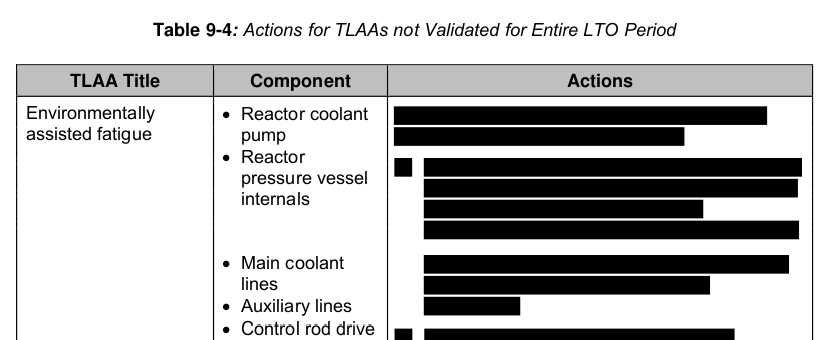
Extract from the previous version of the Safety Case – revision 1a

This press statement was first released by Save Bantamsklip on 15 September 2023

In March 2023 civil society groups rejected the consultation process for the Koeberg life extension run by the National Nuclear Regulator (NNR), citing concerns about a lack of transparency. Those concerns are now vindicated as the threat of legal action has forced Eskom to release information that was previously being withheld from the public by both Eskom and the NNR. (The newly released versions can be found at the bottom of this article.)

Continue reading

Civil society rejects NNR public consultation process for Koeberg life extension

Koeberg comes to the end of its life in the second half of 2024 when Eskom’s licence issued by the National Nuclear Regulator (NNR) expires. Eskom has applied to the NNR for a twenty year extension to this licence and were required to prepare a Safety Case which described why such an extension would be safe. Initially, at a Public Safety Information Forum meeting on 31 March 2022, Eskom refused to release the Safety Case publicly but later backtracked and released a redacted version of it with many sections blacked out in January 2023. 

As part of the licence application, the NNR started a public consultation process on 8 January 2023 with a deadline for submissions on 16 March 2023. Due to the lack of transparency from Eskom, civil society organisations have rejected this process and demanded the complete suspension of the comment period.

Continue reading

State of disaster regulations a nightmare

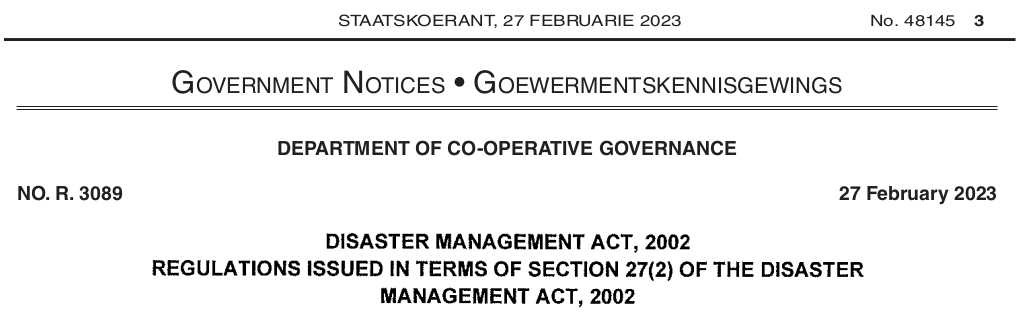
On 27 February 2023 the Department of Cooperative Governance and Traditional Affairs gazetted the national state of disaster regulations related to South Africa’s energy crisis.

When the government first announced that it intended to declare a state of disaster, many experts and organisations stated that it was not necessary and a relaxed legislative environment would erode democratic governance. Inaction by the Department of Mineral Resources and Energy (DMRE) caused the high levels of load shedding. Declaring a state of disaster was just an attempt to deflect blame.

This declaration of a state of disaster to “cut through the red tape” also allows the state to bypass important regulations and processes which is a major concern.

Continue reading

IAEA report reveals 14 safety issues with Koeberg

In March 2022 a team from the International Atomic Energy Agency (IAEA) visited Koeberg to report on how ready the plant was to implement Eskom’s plan to extend its life beyond 2024. Eskom wanted to keep this report secret, but due to a request under the Promotion of Access to Information Act, it is now public.

The report lists fourteen safety issues with the planned life extension, or LTO (Long Term Operation), which mostly highlight that given the current conditions at Koeberg, the refurbishment cannot be done on time, nor safely. The full report is included below.

Continue reading

The Risks of an “Energy Emergency”

A declaration of an ‘energy emergency’ has been touted as a necessary step to “cut through the red tape” and address the electricity crisis. But what exactly does this mean? Which regulations or processes will be bypassed?

When it comes to the Koeberg nuclear plant, one upcoming regulatory requirement and a concern for those advocating for a life extension is getting approval from the National Nuclear Regulator (NNR). The current operating licence expires in July 2024, and without the NNR granting a life extension, this is when the plant will have to be permanently shut down.

Continue reading

Suspension of NNR Board member challenge: settlement reached

Issued by Rodney Anderson, of Save Bantamsklip

Save Bantamsklip | Xplorio Gansbaai

Six months after appointing a Board member to the Board of National Nuclear Regulator (NNR) in order to represent affected communities, Minister Mantashe unlawfully suspended Peter Becker on 18 January 2022. He has been a vocal campaigner against nuclear power in South Africa for about 12 years, and when Mantashe appointed him in June 2021 it was widely welcomed as an enlightened step. According to the NNR Act of 1999, the NNR Board also includes a member from the Department of Mineral Resources and Energy (DMRE), well known for a very pro-nuclear stance.

Continue reading

Modelling report: Koeberg life extension costs the country

It is generally agreed that nuclear power comes with an inherent risk. What is hotly debated is whether or not there are benefits which outweigh that risk. When it comes to the Koeberg Nuclear Power Plant, Eskom have had the approach that since Koeberg produces electricity at a cost of around R0.45 per kWh, it is a ‘no-brainer’ to spend whatever is needed on a refurbishment to extend the life of the plant beyond the end of its design life in 2024.

A recently released modelling report estimates that doing that refurbishment would result in additional costs of R50bn “from a combination of the actual costs of life extension, additional open cycle gas turbine (OCGT) usage, large key-customer curtailment requests/instructions, and scheduled load-shedding.” It will also increase carbon emissions due to the additional use of OCGTs.

Continue reading