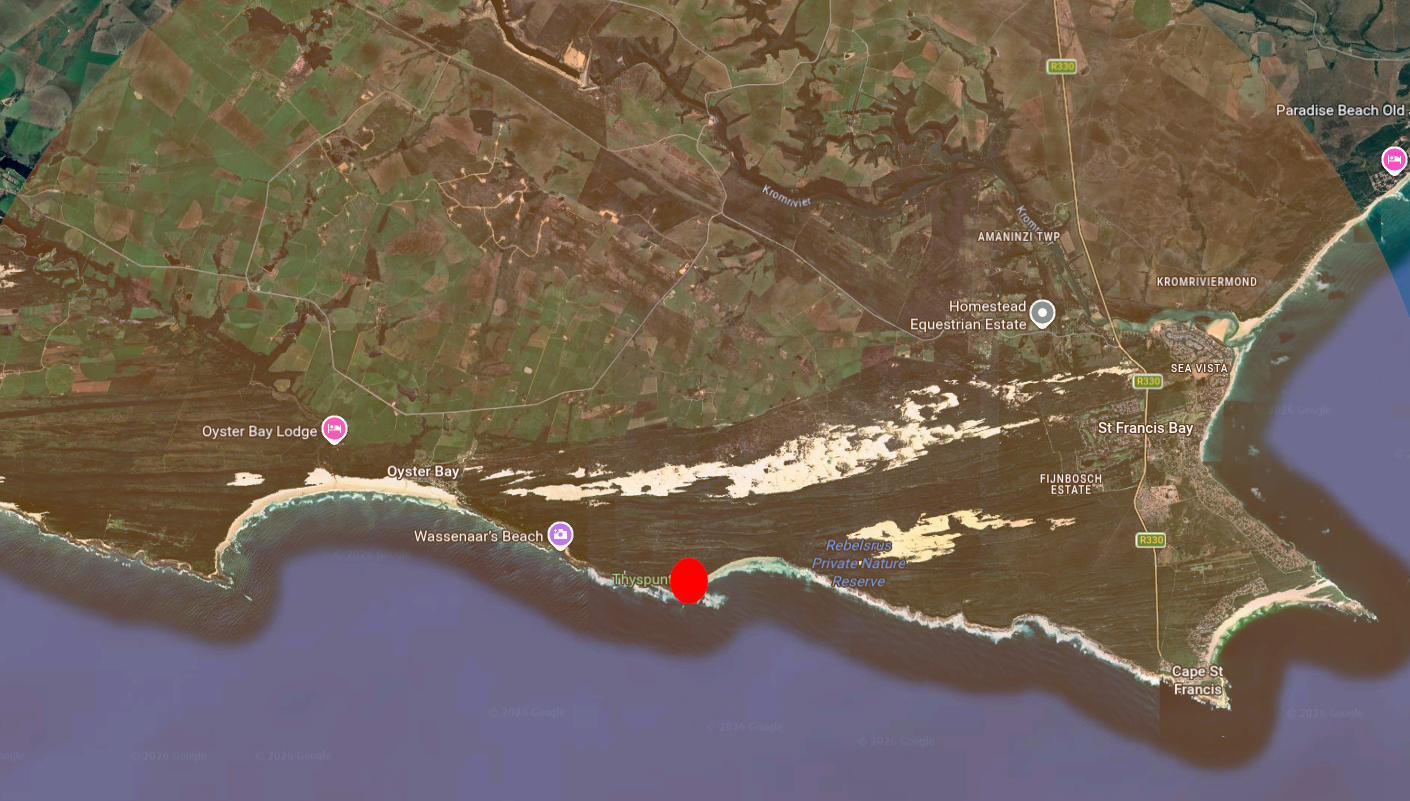
The Department of Forestry, Fisheries and the Environment (DFFE) has granted an extension for the preparation of the draft Environmental Impact Report (EIR) for Eskom’s proposed 5,200 MW nuclear power station at Thyspunt. Announced by the independent Environmental Assessment Practitioner, WSP, on 21 October 2026, the extension will allow additional studies required by the DFFE to be completed.
The draft Environmental Impact Assessment Report (EIAR) is now expected to be released for public review in the first quarter of 2027.
Background: The assessment and the legal requirements
Eskom’s draft Scoping Report was submitted to the DFFE on 6 July 2026, accompanied by objections from civil society organisations, local communities and industry experts. These highlighted the omission of a detailed economic comparison of nuclear power with alternative electricity generation technologies.
The report focused on the Plant-Parameter Envelope, a technical framework covering a range of reactor types and their potential environmental impacts. However, it did not include a side-by-side economic comparison of nuclear options with alternatives such as renewable energy and energy storage.
WSP had initially proposed excluding a comprehensive study of alternatives from the assessment. Following objections, the DFFE intervened on 14 August 2026, instructing WSP to undertake additional studies, including an economic evaluation of alternative generation technologies. These requirements necessitated more time than is normally allowed for completing the draft EIR.
DFFE’s intervention
The DFFE’s intervention was intended to ensure that the assessment adequately addresses feasible alternatives, in accordance with the requirements of the National Environmental Management Act (NEMA) and its Environmental Impact Assessment Regulations.
The additional studies will require an economic assessment of alternative electricity generation technologies, rather than limiting the assessment to the environmental implications of different nuclear reactor designs. It will also have to cover the alternative site Bantamsklip, near Hermanus, which WSP attempted to exclude during the scoping phase.
What the public demanded
Objections from stakeholders raised four principal concerns:
- Incomplete assessment of alternatives: The range of options considered was inadequate.
- Missing economic comparisons: The assessment lacked comparative cost-benefit data for renewable energy and other alternatives.
- Insufficient consideration of impacts: The assessment did not adequately weigh the risks and socio-economic implications of the alternatives.
- Compliance with NEMA: The omission of a comprehensive alternatives assessment raised concerns about compliance with environmental assessment requirements.
The DFFE’s subsequent intervention required additional work to address these concerns, delaying completion of the draft EIAR but broadening the scope of the assessment.
Expert evidence: Dr Grove Steyn’s affidavit
Dr Grové Steyn, Managing Director of Meridian Economics and former Eskom industrial engineer, provided a sworn affidavit (see below for full document) in February 2026 critically examining Eskom’s assumptions. It argues that renewables, either alone or combined with complementary technologies, can achieve the required generation capacity “far sooner, far cheaper, with less financial risk and greater socio‑economic benefits”.
Key economic points from the affidavit
- Renewables can meet the 5,200 MW target with a mix of wind, solar photovoltaic, and energy storage that supplies the necessary baseline and load‑following capacity.
- Cost superiority as the levelised cost of electricity (LCOE) – the average total cost to build and operate a power plant over its lifetime, divided by the cost of the total electricity it produces – for a renewables‑plus‑storage portfolio is significantly lower than that of nuclear when downstream costs are included.
- Risk profile as nuclear projects carry higher capital risks, longer construction times, and substantial decommissioning liabilities.
- Socio‑economic benefits as renewable projects create local jobs, reduce greenhouse‑gas emissions, and deliver health benefits, while nuclear raises environmental and safety concerns.
These arguments directly counter the draft report’s implication that nuclear technology is the sole viable option.
Implications for South Africa’s energy policy
This case illustrates a shift in environmental authorisation decisions. By mandating a rigorous economic comparison, the DFFE has set a precedent for future nuclear projects that alternatives cannot be omitted which means that the case for renewables in national energy planning is strengthened, environmental assessments have enhanced transparency and accountability, and may even prompt reviews of other nuclear projects where alternative analyses are incomplete.
This is the full affidavit by Dr Grové Steyn:
T

