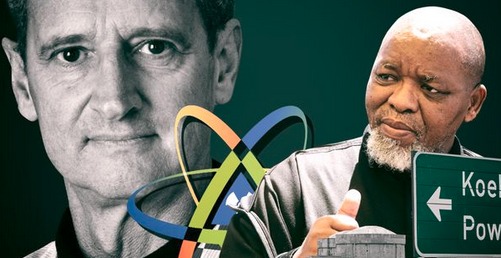
The recent announcement of a shortlist of four candidates for the “community representative” position on the board of the National Nuclear Regulator (NNR) has prompted renewed concern about the absence of meaningful public representation in one of the country’s most critical regulatory bodies.
The NNR’s role and the importance of the community representative
The NNR plays a central role in overseeing nuclear safety and protecting the public from risks. Its decisions are particularly significant at a time when South Africa is navigating key nuclear developments, including long-term operation (LTO) plans for the Koeberg Nuclear Power Station,disposal of high level radioactive waste in Namaqualand, and proposed new build sites such as Thyspunt and Bantamsklip.
According to the NNR Act of 1999, the NNR board is required to include a community representative to ensure that the voices of affected communities are considered in decision-making. However, this requirement has been consistently undermined. Prior to 2021, the position was vacant and in that year Peter Becker was appointed to the position. In 2022 he was dismissed for misconduct, but claimed these were fabricated allegations made by other members of the NNR board in bad faith with an ulterior motive. This was confirmed in a High Court ruling which found the dismissal was “unlawful, unconstitutional, and done in bad faith”. This decision was challenged by the NNR but upheld by the Supreme Court of Appeal in June 2023. Since 2022, the position has remained vacant.
Now, four years later, a candidate shortlist has been released raising questions about accountability and the effectiveness of parliamentary oversight in ensuring compliance with governance requirements.
What happened to candidates nominated from communities?
Several civil society organisations nominated suitable candidates from the affected communities but none of them have made the list.
The shortlisted candidates appear to come predominantly from technical, academic or state-aligned backgrounds, rather than from grassroots or community-based structures. This has raised concern from affected communities as to who will genuinely represent the lived experiences and interests of communities situated near nuclear facilities or proposed development sites. The end result is a regulator that appears technically competent while being socially disconnected.
Civil society responds
“It is absolutely ridiculous that we have before us NNR Board community representative nominees that many in affected areas don’t know, haven’t engaged with, and that have a clear lean towards a pro-nuclear future,” says Project 90 by 2030 Policy and Advocacy Coordinator, Gabriel Klaasen. “We don’t expect an anti-nuclear representative but we do expect a representative that will be able to engage community members of different backgrounds and interests and meaningfully reflect them in the relevant forums. In a year marking 30 years of our constitution and our local elections, it is interesting that people’s power remains on the backburner.”
“The community representative on the NNR board is not meant to come from industry, nor should they have a vested interest in nuclear energy,” says Southern African Faith Communities’ Environment Institute’s (SAFCEI) Executive Director, Francesca de Gasparis. “Their role is to represent the needs and concerns of communities. There is a serious gap in the way the NNR is operating as a regulator and we are deeply concerned about the extent to which failures and shortcomings are being allowed to continue unchecked.
“There is a real need for a stronger board that is committed to rigorous regulation and the application of international best practice standards for safety at Koeberg. The reality is that Koeberg is already falling behind on its own planned execution timelines, and that must be acknowledged and addressed going forward.
“The board needs to be informed, independent, and prepared to support a far more rigorous regulatory approach – one that puts safety and citizens first. This includes ensuring that risks and liabilities are properly dealt with, particularly in light of outdated emergency safety plans, inadequate maintenance, and the failure to implement essential internationally recognised safety requirements aimed at preventing a nuclear accident,” says De Gasparis.
“The 1996 Convention on Nuclear Safety was ratified by the South African parliament 30 years ago but parliament has failed to implement one of the main pillars of that treaty which is all about nuclear safety,” says Koeberg Alert Alliance member and ex-NNR Board member, Peter Becker.
Insufficient independence of the NNR
The International Atomic Energy Agency visited South Africa in 2013 and made the following observations about South Africa in The Integrated Nuclear Infrastructure Review (INIR):
“Considering that the minister of energy is also in charge of the promotion of nuclear energy and, given the structure, the designation of the board members and the process to approve the NNR’s budget, the INIR team is of the view that there is no adequate separation between the regulatory functions and the promotional activities, thus calling into question the effective independence of the NNR.”
Koberg Alert Alliance member and ex-NNR board member, Peter Becker, says: “According to the treaty, the NNR is required to be entirely independent from any other government body which utilises or promotes the use of nuclear energy. However, it is the Minister of Energy who has received the shortlist, and he will make the final decision. Minister Ramokgopa has also been a vociferous promoter of the use of nuclear power plants, which is a clear conflict of interest.
“I am deeply disappointed in parliament, and now in our coalition government, who have failed to address this crucial issue,” Becker says.
Meaningful community representative at board level is crucial
If the NNR’s mandate is to protect the public, then meaningful public participation at board level is vital. Without strong, independent community voices, the NNR risks becoming an extension of state and industry consensus, rather than an impartial guardian of public safety.
As South Africa considers the future of its nuclear programme, ensuring credible, representative governance at the NNR is fundamental to public trust.

