The recent disclosure of a series of safety-related incidents at South Africa’s Koeberg Nuclear Power Station and especially the official response, has raised questions about shortcomings in independent oversight within the country’s nuclear sector, as well as concerns about the equipment and skills at the plant. Although the first reported incident occurred on 30 June 2026, the public only received a detailed explanation 20 days later, following extensive media coverage. Between 30 June and 16 July, four safety-related events occurred during maintenance on Koeberg Unit 2, including ventilation failures, airborne contamination alarms and radiation monitoring alerts.
Rumours of these radiation incidents started to circulate and journalists began sending questions to Eskom around 15 July and finally, the Minister for Energy and Electricity, top Eskom officials and the National Nuclear Regulator (NNR) held a joint media briefing on the morning of Sunday 19 July. This raises the question: Would the public have known about these incidents at all if the information had not been leaked?
“It’s unsurprising that there has once again been a delay in transparency from the NNR and the nuclear industry as a whole,” says Project 90 by 2030, youth spokesperson, Gabriel Klaasen.
“These tactics to keep the public in the dark about Koeberg and its safety are nothing new, we saw it with the highly redacted safety case a few years ago and now again with the leak at Koeberg under its conditional licence extension. The public deserve transparency and accountability from both the NNR – who should be an independent regulator – and the Department of Electricity and Energy; the lack of it merits investigation,” says Klaasen.
Multiple incidents deserve more than reassurance
Government, Eskom and the NNR have said that there was no external radioactive release and that there was no danger to the public. They have further stated that the incidents were classified as Level 0 events on the International Nuclear and Radiological Event Scale.
An email issued by Eskom on 18 July read in part “due to the importance of this matter, Eskom together with the Ministry of Electricity and Energy will host a press conference tomorrow morning, 19 July 2026” which seems to indicate the incidents were considered important.
“There were four separate failures occurring over three weeks,” says ex-NNR board member and Koeberg Alert Alliance member, Peter Becker. “What would have happened if the radiation monitoring had also failed on just one of those occasions?”
Coordinated messaging
The unusual and lengthy joint media briefing involving a Minister, top Eskom nuclear officials and the NNR CEO appeared primarily focused on assurances that there was no danger and that there had been no external radiation release.
“While reassurance is important, transparency and communicating to the public requires more than carefully aligned messaging,” says Community Outreach Officer, Lydia Petersen. “It requires timely disclosure of incidents, clear explanations of their causes and open reporting afterwards on corrective actions. Public confidence is strengthened not by controlling the narrative, but by demonstrating accountability.
“The delayed messaging by the Government, Eskom and the NNR, appears to be a coordinated effort to control the messaging to minimise the importance of the issue before the media briefing,” says Petersen.
Structural concerns remain
These events also raise broader questions about South Africa’s nuclear governance. An effective nuclear regulatory system depends on an independent regulator that is seen to operate separately from both the operator and political decision-makers. When major public communication occurs through coordinated briefings involving the operator, regulator and executive, it becomes increasingly difficult for the public to distinguish independent oversight from institutional reassurance.
“Civil society has been vocal about safety concerns at Koeberg, particularly Unit 2, including the status of its “defense-in-depth” and the risks this could pose to the public,” says the Southern African Faith Communities’ Environment Institute’s (SAFCEI) Executive Director, Francesca de Gasparis. “The NNR and Eskom need to be far more transparent and factual about the status of Unit 2, particularly given the ongoing delays to its maintenance and testing programme.
“These concerns also raise questions about the decision to grant Unit 2 a 20-year licence extension. The NNR initially granted a conditional eight-year extension1, yet later approved a 20-year extension despite significant outstanding maintenance and safety issues. The public deserves to understand the basis for that decision and whether Unit 2 is genuinely meeting the required safety standards,” De Gasparis says.
“Transparent and accountable governance is a cornerstone of democracy,” says Liz McDaid, veteran environmental justice activist, who has been involved in challenging previous nuclear deals that were found by the courts to be unlawful. “These incidents raise questions about whether the NNR should report to the same minister responsible for promoting nuclear energy.
“To avoid potential conflicts of interest, the nuclear regulator should instead report to a ministry such as Environment, Forestry and Fisheries or Health, with a clear separation between the promotion of nuclear energy and independent safety oversight,” says McDaid.
Questions over Koeberg Unit 2
The latest incidents come against the backdrop of ongoing challenges at Koeberg Unit 2, which remains in an extended outage expected to last approximately 150 days.
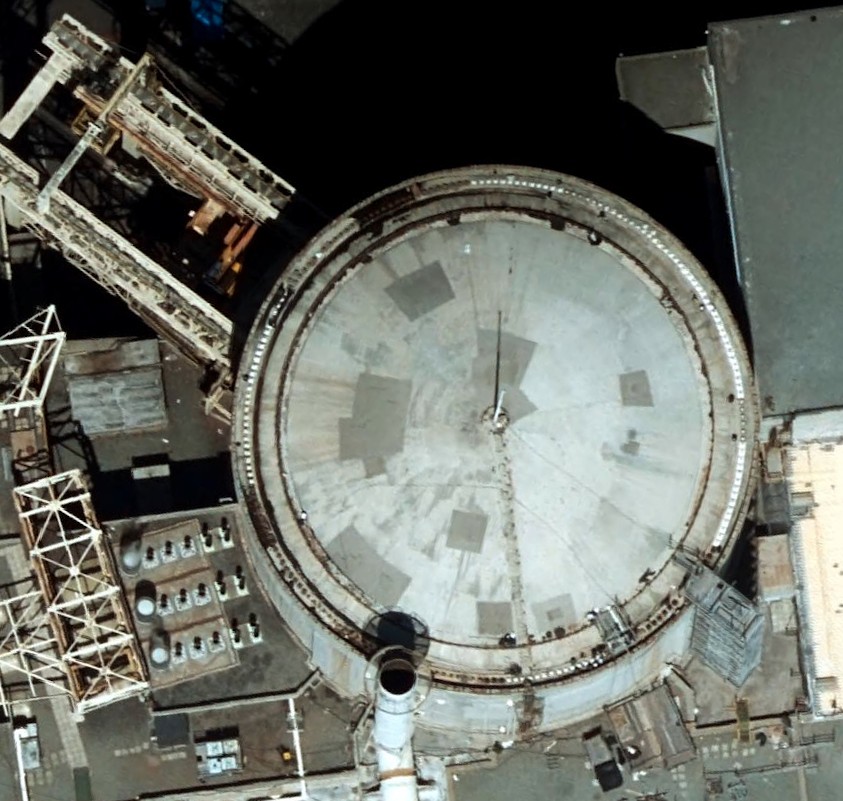
An integrated leak test is scheduled for August as part of the unit’s return-to-service process. Questions remain about whether the containment building will be able to meet the necessary technical requirements and deadlines following ongoing concerns regarding its condition.
Public participation cannot be an afterthought
The recent events also demonstrate why meaningful public participation in nuclear governance is essential. Mechanisms such as the Public Safety Information Forum (PSIF) exist to facilitate engagement between nuclear operators, regulators and affected communities. These platforms should be used proactively to communicate safety-related developments, answer questions and build public confidence.
“PSIF meetings are supposed to enable meaningful public participation and build trust,” says Project 90 by 2030 Director, Lorna Fuller. “That can only happen if stakeholders are informed promptly when safety-related incidents occur. Transparency means sharing information when it matters, not after the narrative has been managed.”
“Members of the PSIF were not informed of these incidents when they occurred. I also sent a direct query to Eskom’s Koeberg stakeholder manager on 15 July, but received no response,” says Becker. “The long delay between the first incident and any statement or response to questions appears as a coordinated effort to curate the information before it is released. This is damage control, not transparency.”
Implications for South Africa’s nuclear future
The Koeberg incidents occur as government continues to pursue an expanded nuclear programme making repeated safety issues like these a matter of public concern, and calls into question the ability of Eskom to operate nuclear plants safely. Koeberg is currently producing only a third of its rated power due to a combination of time overruns with life extension work and errors when replacing a steam turbine, which has resulted in further doubts about nuclear power being the safe, reliable option Eskom claims it to be.
“The Minister and Eskom have repeatedly assured the public about nuclear safety via statements such as “We remain committed to transparency”,” says Petersen. “This kind of carefully managed press briefing, held only after information has already been leaked, does not come across as transparent and does not help build public trust.
“The inherent dangers related to nuclear power plants combined with a history of poor maintenance and accidents at Eskom plants have led to questions as to whether Eskom can safely build and operate additional nuclear plants,” Petersen says.
- Note that the NNR never issued a formal eight year extension, although it was mentioned as a possibility in this document: TR-NPP-24-001-LTO-Safety-Evaluation-Report ↩︎

