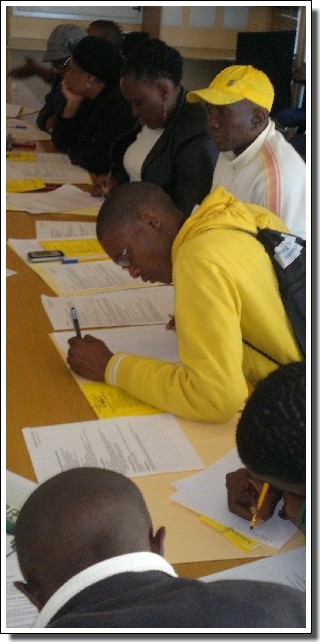
In June representatives of Eartlife Africa Jhb and Greenpeace visited Cape Town and the Hermanus area. Several meetings with other organisations were arranged, including one in Woodstock with Right To Know activists. Plans for a national ‘nuclear school’ where discussed, but funding would be required. This would be unlikely to happen before October and since the next draft of the Nuclear-1 Environmental Impact Report was due to be released around October, it was agreed that workshops should be arranged before that if possible. To maximise impact, the workshops would be in ‘train the trainers’ format, to capacitate activist leaders to speak authoritatively on the nuclear issue. Continue reading
Official report on Fukushima – what can South Africa learn?
An independent in depth report on the Fukushima nuclear disaster commissioned by the Japanese parliament was released in July 2012, and it comes to some very important conclusions. As Eskom attempts to get approval to build three more nuclear plants along the southern coast, South Africa should be looking very closely at this report to see if there are lessons we should learn from it.
The earthquake or the tsunami?
The nuclear industry has repeatedly made the claim Continue reading
‘Secret’ REBID documents revealed
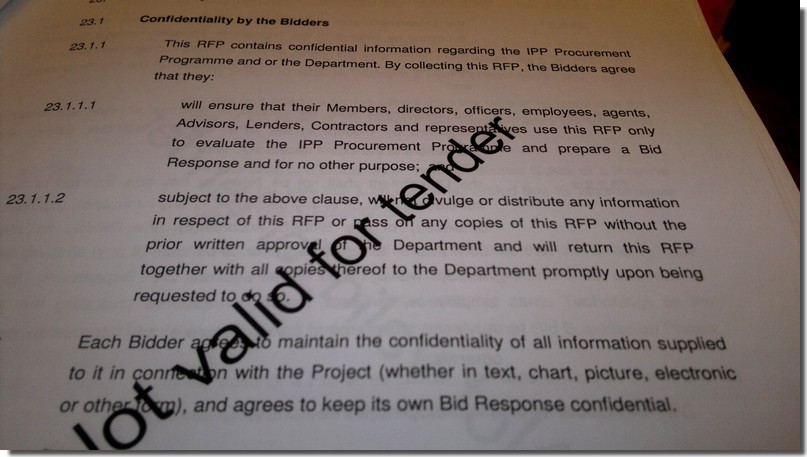
When the Department of Energy called for bids to supply renewable energy to the South African grid, they produced a bid document which described the conditions and information required from bidders. This was only available to prospective bidders who paid a fee of R15 000, and signed a confidentiality agreement which included the stipulation to “not divulge or distribute any information in respect of this RFP or pass on any copies of this RFP”.
Nuclear ‘renaissance’ stillborn
First published in Business Day, 23 July 2012
The nuclear power industry is deeply troubled, with little cause for optimism. There is growing worldwide public resistance to nuclear power stations, President Obama has terminated government subsidies in the USA for nuclear power, and Germany and Switzerland have committed to shutting down all their reactors. While the renewable energy industry has seen dramatic growth and constantly falling costs, the nuclear industry grapples with spiralling costs, the seemingly intractable waste disposal issue, and the ongoing huge economic and human costs of the Fukushima nuclear disaster.
A renaissance?
Cleaning up Japan after the Fukushima Nuclear disaster
I have written before about what happened in Fukushima in March 2011, and about measuring radiation levels in Japan. Given the situation there, a major question is: how can the contamination been cleaned up?
Removing the top 5cm
Most of the longer lasting radioactive material released was caesium-137, which is a metal that boils at a low temperature (641° C). Large quantities of caesium vapour were released into the atmosphere, and this condensed into very fine particles, which were spread by wind and rain and deposited on over a thousand of square kilometers. Each atom of caesium-137 is unstable, and within about 30 years, half of them will decay, releasing gamma rays. Caesium can form salts (similar to sodium chloride, or table salt) which are absorbed into plants and by animals and humans. Continue reading
Eskom finally releases Koeberg ‘Emergency Plan’
The Koeberg Alert Alliance (KAA) first requested a copy of the emergency and evacuation plan for for the Koeberg Nuclear Power Station via a Promotion of Access to Information Act (PAIA) request in 2010. This was formally refused on 2 June 2010 by Steve Lennon, the co-ordinating Deputy Information Officer for Eskom Holdings, for convoluted legal reasons.
A second PAIA application was made by the KAA in 2011. This was initially refused on 22 November 2011 by Eddie Laubscher, the National Deputy Information Officer for Eskom Holdings. The CEO of the NNR (National Nuclear Regulator), Adv Boyce Mkhize also formally refused access to the plan on 23 November 2011, claiming it was classified as confidential. Continue reading
What actually happened at Fukushima?
During a recent trip to Fukushima, there was the opportunity to see first hand the effects of the nuclear disaster on the surrounding areas, and to speak to people living there whose daily lives have been affected, and will continue to be affected. With the one anniversary approaching, its an appropriate time to look back over the year and consider what actually happened. Continue reading
Measuring radiation in Fukushima, Japan
During our recent trip to Fukushima, we carried two geiger counters with us, one inside the bus, and one taped to the outside of the window, facing inwards.
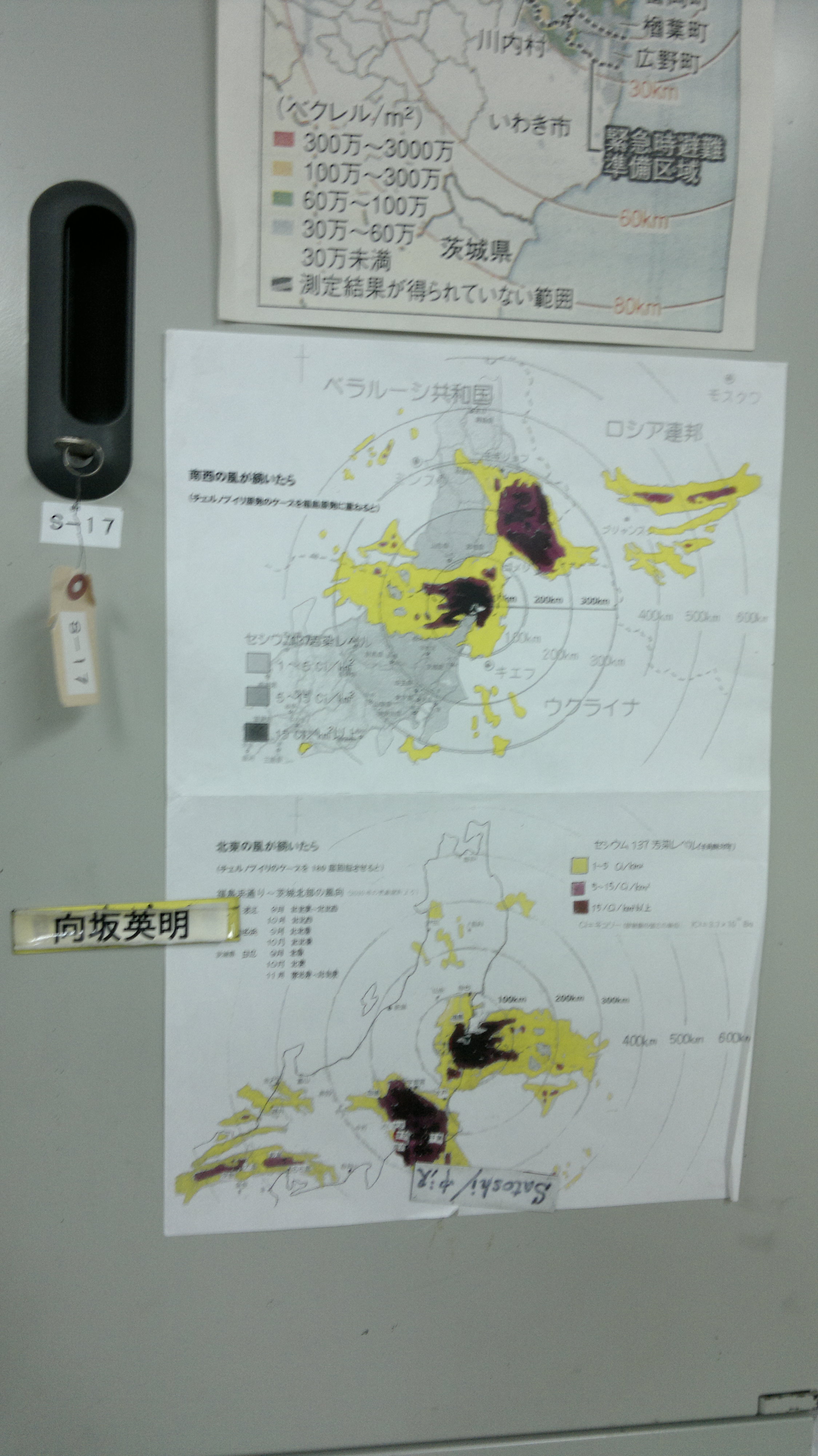
These geiger counters measure gamma radiation, and give a readout in micro Sieverts per hour, or μSv/h. Most people in the world are not familiar with these units, but, of course, here in Japan there is a high level of familiarity and interest in radiation levels. For example, on the right is a map stuck on the lockers in an office I went to. Continue reading
On the ground in Fukushima
I am sitting in a hotel in Tokyo, after attending the Global Conference for a Nuclear Power Free World this past weekend. The sessions were video recorded, and was streamed in real time. Over 100 000 people watched the streaming. See http://npfree.jp/english/
Before the conference we were taken on a two day tour of Fukushima city and some areas nearby, and listened to local people talk about the experience, Continue reading
Nuclear industry in trouble
The nuclear era can be divided into BF and AF – before and after Fukushima. The disaster in Japan was a watershed moment, even prompting the normally up beat International Atomic Energy Association (IAEA) to issue a statement in September 2011 downgrading their predictions for the growth in the nuclear industry. The CEO of one of Germany’s power companies said the industry would face ‘extraordinary costs’ due to the resulting market shifts.